
Dental AI Receptionist: What It Actually Costs and Whether Your Practice Needs One
A practical buyer's guide to dental AI receptionist costs, return on investment, rollout planning, and vendor checks.
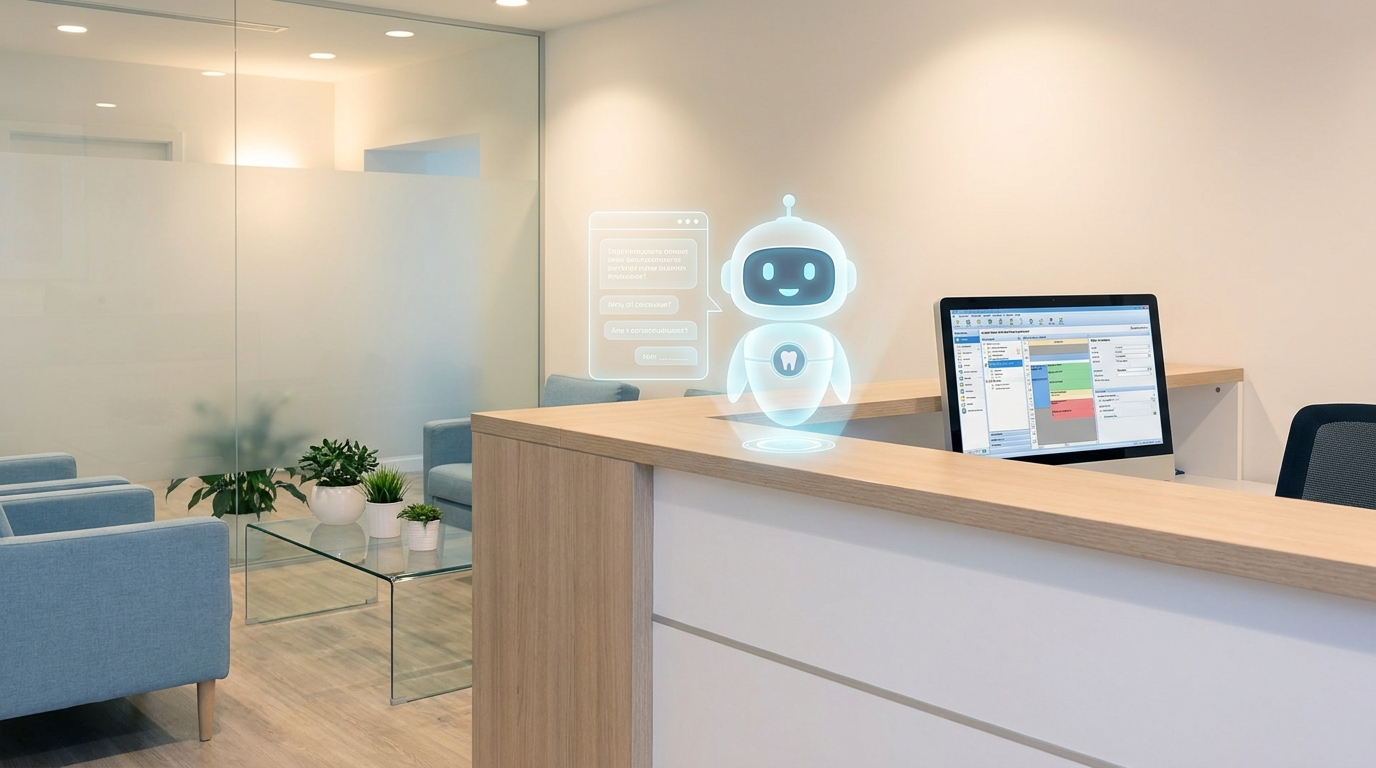
Dental AI Receptionist: What It Actually Costs and Whether Your Practice Needs One
A patient calls while your front desk is checking someone in. Another call lands during lunch. A third comes after closing. Each caller needs a simple answer, but your team cannot be in two places at once.
A dental AI receptionist can cover part of that gap. It can answer routine questions, collect caller details, route urgent requests, and offer appointment times when the setup supports those actions.
The hard part is not finding a product demo. It is deciding what your practice needs, what the full cost will be, and how you will measure the result. This guide gives you a practical way to make that decision.
Start with the work, not the software
Do not buy a tool before you know which calls it should handle. Pull a sample of calls from normal weeks and sort them into clear groups:
- New patient inquiries
- Booking and rescheduling requests
- Office hours, directions, and parking questions
- Insurance and payment questions
- Prescription, treatment, and clinical questions
- Urgent or after-hours calls
- Calls that need a specific team member
Routine calls are the safest place to begin. Clinical questions, upset patients, billing disputes, and complex treatment discussions should move to trained staff.
Write down what a good outcome looks like for each call type. A new patient inquiry may need a name, contact details, reason for the visit, and a booked time. An urgent call may need immediate transfer under a protocol approved by the practice.
This call map becomes your buying checklist. It also prevents a vendor from shaping your process around the limits of its demo.
What a dental AI receptionist can do
A well-configured system may answer calls outside office hours, handle common questions, collect intake details, and transfer calls. Some systems may also book or change appointments.
Those features depend on the current product, your phone setup, your practice management software, and the permissions you allow. Never assume a feature shown in a sales call will work in your live environment.
Ask the vendor to demonstrate your exact call flows. Use your office hours, appointment types, transfer rules, and common patient questions. Then test what happens when a caller changes the subject, speaks unclearly, or asks for something outside the approved script.
The system should say when it does not know. It should route the caller rather than make up an answer.
Dental AI receptionist cost ranges
The original source guide used the following ranges as planning figures. They are not quotes or fixed market prices. Vendors may charge by minute, call, location, feature, or usage tier. Confirm every current fee in writing.
| Service level | Source guide range | Common scope to confirm |
|---|---|---|
| Basic AI answering | $25 to $99 per month | Limited calls, simple questions, and message capture |
| Scheduling and workflow support | $150 to $350 per month | Booking, transfers, and practice-specific call flows |
| Advanced setup | $300 to $800 per month | More complex workflows, custom scripts, and broader usage |
The monthly fee is only one part of the cost. Ask about setup, number porting, call forwarding, extra minutes, extra locations, text messages, support, custom work, and cancellation.
You should also budget staff time. Someone must approve scripts, test calls, review mistakes, and update information when hours or policies change.
A low base price can become expensive if every useful action sits behind an add-on. Get one written estimate based on your recent call volume and expected growth.
Compare the cost with the current problem
Return on investment should come from your own records, not a vendor's savings calculator.
Start with a four-week baseline. Record:
- Total inbound calls
- Calls answered by staff
- Calls sent to voicemail
- New patient calls
- Appointments booked from calls
- Cancellations and reschedules handled by phone
- Staff time spent returning messages
Then set a simple value for a completed booking. Use your practice's collected revenue and show rate. Do not use lifetime value unless you can support it with your own data.
A useful monthly formula is:
Value from added kept appointments + staff time recovered - total monthly service cost
Track kept appointments, not only bookings. A system can look productive while filling the calendar with poor matches, duplicate records, or times that later need correction.
Also track transfer failures, wrong answers, caller complaints, and staff cleanup time. Those costs belong in the same review.
Check scheduling and software support
Integration claims need careful testing. A vendor may use the word "integration" for a direct connection, a calendar bridge, a manual handoff, or a third-party connector.
Ask the vendor to show how it works with your current software version. Confirm whether it can read live availability, respect provider rules, create the right appointment type, avoid double booking, and write notes in the correct place.
You should also confirm who supports the connection when it breaks. Get the answer in the contract. Current vendor support can change, so verify it again before launch.
If protected health information may pass through the system, review the full data path. Confirm the contract, Business Associate Agreement, data handling, retention, deletion, access controls, subcontractors, and current vendor support. Do not treat a general HIPAA statement on a website as approval for your use case.
Your privacy or compliance lead should review the setup before real patient data enters the system.
Run a controlled first-month rollout
Start with a narrow job. After-hours message capture or overflow calls are easier to supervise than moving every call on day one.
During the first week, test normal calls and difficult calls. Use different voices, background noise, interruptions, and requests that should trigger a human transfer.
For the next two weeks, review call records each day. Fix confusing answers, missing transfer paths, and schedule rules. Keep a clear owner for every change.
At the end of the month, compare the result with your baseline. Look at kept appointments, staff time, caller outcomes, errors, and full cost. Expand only when the first use case is stable.
Questions to ask before signing
Use these questions in every vendor review:
- What is included in the quoted price?
- What usage creates extra charges?
- Can you run our real call scenarios in a live test?
- How does the system handle uncertainty and human transfer?
- What happens when our scheduling system is unavailable?
- Can we export call records and performance data?
- Who owns scripts, recordings, transcripts, and caller data?
- What are the retention and deletion rules?
- Will you sign the required Business Associate Agreement?
- Which subcontractors can access or process data?
- What are the cancellation and number porting terms?
- Who provides support after launch?
A dental AI receptionist is a fit when routine calls are going unanswered and your team has clear rules for booking, transfer, and review. It is a poor fit when the practice expects software to make clinical judgments or repair a broken scheduling process.
If you want help mapping the calls, testing the numbers, and planning a safe rollout, Book a fit call.