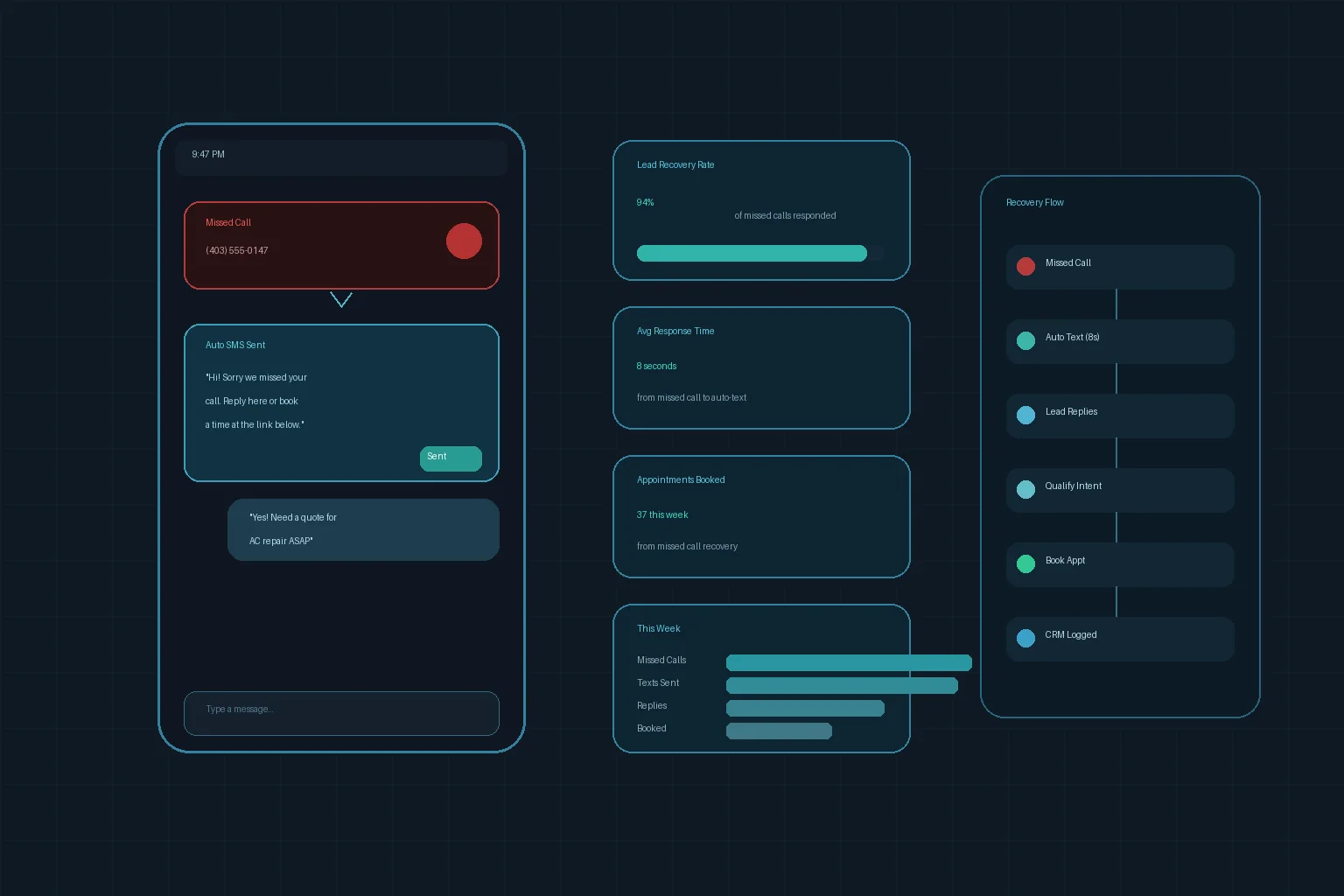
The phone rings while you are comparing policy options for a long-time client. It rings again while you are driving between appointments. By the time you check voicemail, three potential customers have already requested quotes from competitors.
This is the daily reality for most insurance agents. Independent agencies, captive agents, and small brokerages all face the same problem. The phone is the lifeline of the business, but nobody can answer it all the time.
An AI assistant for insurance agents fixes this. It answers every call, captures quote requests, pre-qualifies leads, and books appointments around the clock. It turns missed calls into submitted applications.
Why insurance agents miss more calls than they think
Research shows that insurance agencies miss 39% of inbound calls during business hours. The number climbs above 60% after 5 PM and on weekends, when most people finally have time to shop for coverage.
The math is painful. If your agency runs Google Ads or Facebook campaigns to drive quote requests, every missed call is wasted ad spend. If one lead costs $80 to generate and you miss four calls per day, you are throwing away over $1,500 per week in acquisition costs alone.
Even when someone leaves a voicemail, the damage is done. Speed to lead matters in insurance. A prospect who requests a quote and gets no response within an hour is 60% less likely to buy from you. By the time you call back the next day, they have already collected three other quotes.
What AI does for insurance agents
An AI assistant for insurance agents is not a voicemail system. It is a virtual team member that handles the front end of your sales process.
Here is what it does:
- Answers every call instantly. No ringback, no hold music. The caller hears a professional greeting with your agency name.
- Captures quote requests. The AI collects the caller's name, contact info, policy type needed, and relevant details like vehicle information, property address, or business type.
- Pre-qualifies leads. It asks screening questions you define. Is the caller looking for auto, home, life, or commercial coverage? What is their timeline? Do they have any major claims or compliance issues?
- Checks coverage areas. The AI confirms the caller's location matches your licensed states and appointed carriers. Out-of-area calls are handled gracefully.
- Books appointments directly. For qualified prospects, the AI checks your calendar and offers available slots. The caller books a consultation on the spot without waiting for a callback.
- Routes urgent calls. You define what counts as urgent. A client with a claims emergency gets transferred immediately. A routine quote request gets scheduled for your next available block.
- Sends structured summaries. After every call, you receive a concise report: caller info, policy type, qualifying details, appointment status, and any red flags. No more scribbled message slips or half-complete voicemail transcriptions.
The after-hours quote problem
Insurance shopping does not happen on your schedule. It happens at night, on weekends, and during holidays when people finally sit down to compare rates.
Monday morning at most agencies follows the same pattern. The voicemail light is blinking with quote requests from the weekend. You call back. Half have already bought from a competitor who answered. The other half are still deciding, but only because every agency they called went to voicemail.
If your agency relies on cold inbound leads from advertising, SEO, or referrals, an AI assistant is one of the highest-leverage investments you can make. It captures quote requests while the caller is still motivated and prevents the "I already found someone else" callbacks that waste your morning.
AI vs. traditional options for insurance agents
Most agencies handle calls in one of three ways. Here is how they compare.
Hire a receptionist
A full-time receptionist costs $30,000 to $45,000 per year plus benefits, taxes, and training. They work 9 to 5. They take lunch breaks. They call in sick. They quit without notice.
Even with a receptionist, you still miss calls during meetings, after hours, and on weekends. One person can only take one call at a time. During busy periods, callers get put on hold or sent to voicemail.
Use a live answering service
Traditional answering services charge $300 to $800 per month. They answer calls live but generally take messages rather than booking appointments or collecting quote details. You still spend mornings returning calls and playing phone tag.
Most answering services do not understand insurance. They cannot ask policy-specific questions, check coverage areas, or route leads by carrier appointment. The message you get is "Someone called about insurance. Call them back." That is not enough to close a policy.
Let it go to voicemail
This is free, except for the lost commissions. Most agents underestimate this cost until they track it. If you charge an average commission of $400 per policy and miss just two quote requests per week, that is $41,600 in annual revenue leaking out of a hole you are not even looking at.
AI assistant
An AI assistant costs $200 to $500 per month as a flat rate. It answers every call instantly. It collects complete quote details. It books appointments directly into your calendar. It works 24/7, including nights, weekends, and holidays. It never calls in sick and never forgets a script.
For most agencies, the AI pays for itself the first time it captures a quote request that would have gone to voicemail.
How AI call handling works for insurance agencies
Here is what happens when a prospect calls your agency after hours:
1. The AI answers immediately. The caller hears a greeting customized to your agency. "Thank you for calling Smith Insurance. I can help you get a quote or schedule a time to talk. What type of coverage are you looking for today?"
2. The AI screens the policy type. Based on your configuration, it asks whether the caller needs auto, home, life, commercial, or specialty coverage. It detects keywords and routes the conversation accordingly.
3. It collects the basics. The AI gathers name, phone number, address, and relevant details. For auto quotes, it asks about vehicles and driving history. For homeowners, it asks about property type and location. For business coverage, it asks about industry, revenue, and employee count.
4. It qualifies the lead. The AI asks your qualifying questions. Are they currently insured? When does their current policy expire? Have they filed any major claims in the past three years? Do they own or rent? The answers help you prioritize which leads to call first.
5. It books the appointment. For qualified prospects, the AI checks your real-time availability and offers consultation slots. The caller books on the spot. You wake up to a calendar full of scheduled quote calls.
6. It sends follow-up automatically. A confirmation text goes to the caller with their appointment time and a brief list of documents to bring. This reduces no-shows and prepares the prospect to buy.
What makes AI different for insurance agencies
Insurance is not retail. Generic call centers do not understand the nuances of quoting, carrier appointments, and compliance.
An AI assistant built for insurance handles the details that matter:
- Policy type routing. Auto leads go to your auto specialist. Commercial leads go to your commercial producer. Life insurance inquiries go to the agent with the right licenses.
- Carrier appointment awareness. The AI knows which carriers you represent and can discuss coverage options within your appointed portfolio.
- State licensing checks. It confirms the caller's location matches your licensed states before booking a consultation. No more wasted calls to prospects you cannot write.
- Claims history screening. The AI collects preliminary claims information so your producers walk into every call prepared with context.
- Cross-sell identification. When a caller asks about auto insurance, the AI can mention your home and umbrella offerings to maximize lifetime value.
- Renewal outreach. The AI can call existing clients before renewal dates, remind them to review their coverage, and book policy review appointments.
Setting up AI call handling in under an hour
Most insurance agencies can be live the same day. The setup process is straightforward.
Step 1: Configure your greeting and script. Define how the AI greets callers, what questions it asks, and how it routes different policy types. This usually takes 30 minutes.
Step 2: Connect your calendar. Link your scheduling system so the AI can book consultations in real time without double-booking your blocks.
Step 3: Set your coverage rules. Tell the AI which states you are licensed in, which carriers you represent, and which policy types you write. It uses this to filter and route leads accurately.
Step 4: Define escalation rules. Set who gets notified for urgent calls, how they get notified, and what information is included. A claims emergency might go straight to your cell phone. A routine quote gets scheduled for tomorrow.
Step 5: Test and refine. Call your own number. See how the AI handles different scenarios. Adjust the script based on real caller behavior. Most agencies dial in their setup within the first week.
Cost and ROI for insurance agencies
Most AI assistant platforms cost between $200 and $500 per month as a flat rate. There are no per-minute fees, no overtime charges, and no holiday surcharges.
The ROI is straightforward. If the AI captures just one additional quote request per week that you would have missed, it pays for itself. Most agencies miss several calls per day, especially after hours. Closing just a fraction of those recovered leads produces a clear return.
Compare that to the cost of missing calls. One missed auto policy quote represents $400 to $800 in first-year commission plus renewal residuals. One missed commercial policy can represent $1,000 to $3,000 or more. The math favors answering every call.
When AI makes the most sense for insurance agents
AI call handling delivers the highest ROI for agencies that:
- Receive 10 or more inbound calls per day
- Run paid advertising that drives phone inquiries
- Miss calls during client meetings, lunch, or after hours
- Struggle to return quote requests within 24 hours
- Rely on phone leads for new business acquisition
- Want consistent intake quality without hiring additional staff
- Need coverage outside standard 9-to-5 business hours
If your book of business comes entirely from referrals and you do not depend on cold inbound calls, the impact may be smaller. But if you run any digital marketing, directory listings, or local SEO that drives phone inquiries, an AI assistant is one of the fastest ways to increase your close rate without increasing your ad spend.
Common concerns about AI in insurance
Will callers know they are talking to AI?
Most do not. Modern AI assistants use natural-sounding voices and understand conversational language. If the AI handles the call efficiently and gets the caller to the right outcome, they rarely ask whether it is a person.
What about compliance and data privacy?
The AI collects the same basic information a receptionist would collect: name, contact info, and coverage needs. It does not ask for Social Security numbers, credit card details, or sensitive health information over the phone. Any reputable platform follows standard data handling protocols appropriate for insurance agencies.
What if the AI cannot answer a complex question?
It transfers the call to you with full context. The caller does not have to repeat themselves. You receive a summary of what they need and can take over smoothly.
Does it work with my phone system?
AI assistants work with most business phone systems and VoIP providers. Setup usually involves simple call forwarding or direct integration. You do not need to change your number or update marketing materials.
Stop losing quotes to voicemail
Every missed call is a missed opportunity to write a policy. For most insurance agencies, the math is simple. An AI assistant costs less than the commission on a single policy per month, answers every hour of the year, and pays for itself the first time it books a quote call you would have lost.
You do not have to choose between AI and your team. The best setup puts AI on the front line handling volume, and your producers behind it building relationships and closing policies. Every call gets answered. Every quote request gets captured. Every prospect feels taken care of.
If you are ready to see how AI call handling works for your agency, book a demo and we will show you how Dark Harbor captures the calls you are missing.
See how AI lead response for insurance agencies works in practice.
Compare AI receptionist vs GoHighLevel for insurance agencies side by side.