You run a small business. You do not have a marketing department. You do not have a six-figure ad budget. What you have is a phone that rings, a website that gets some traffic, and a competitor down the street who seems to be everywhere at once.
AI marketing tools promise to level the playing field. Some do. Most do not. This guide cuts through the noise and shows what actually works for small businesses in 2026, with real numbers and honest limits.
What "AI marketing" actually means for small businesses
AI marketing is not one thing. It is a group of technologies that handle repetitive marketing tasks without human oversight. For a small business, that usually means:
- Lead response — Answering inquiries within minutes instead of hours
- Follow-up — Reaching out to leads who did not convert the first time
- Content creation — Writing social posts, blog drafts, and ad copy
- Customer communication — Handling routine questions via chat, text, or voice
- Analytics — Tracking what marketing spend actually produces
The businesses seeing results are not using AI to replace strategy. They are using it to execute faster and more consistently than they could with human staff alone.
What works: lead response speed
Here is a number that should change how you think about marketing: responding to a lead within five minutes makes you 21 times more likely to qualify them than waiting 30 minutes.
Most small businesses wait hours. Some wait days. By then, the prospect has already talked to two or three competitors.
AI fixes this by answering immediately. When someone fills out a form, sends a text, or calls after hours, an AI system can respond within seconds. Not with a generic autoresponder. With a conversation that qualifies the lead, answers basic questions, and books an appointment if the timing is right.
A home services company using AI lead response cut their average response time from four hours to under 30 seconds. Their booking rate increased 34 percent in the first month. The AI did not create new leads. It captured the ones they were already losing.
What works: follow-up that does not stop
Most small businesses follow up once, maybe twice, then move on. The data says that is a mistake. Eighty percent of sales require five or more follow-up touches. The average small business gives up after two.
AI follow-up systems run persistent, polite sequences that span weeks or months. They send texts, emails, or voice messages on a schedule that adapts to engagement. If a lead replies, the AI picks up the conversation. If they do not, the system keeps going without getting discouraged or busy with other priorities.
The key is that modern AI does not sound like a robot. It references previous conversations, adapts tone to the industry, and knows when to escalate to a human. A legal firm using AI client follow-up recovered 28 percent of leads they had written off as dead, simply because the AI kept checking in every two weeks for three months.
What works: SMS as a marketing channel
Email open rates hover around 20 percent. SMS open rates are 98 percent. Ninety percent of text messages are read within three minutes.
For small businesses, SMS is not a nice-to-have. It is a direct line to revenue. AI SMS marketing goes beyond basic blasts. It creates two-way conversations that recover missed calls, confirm appointments, and reactivate old customers.
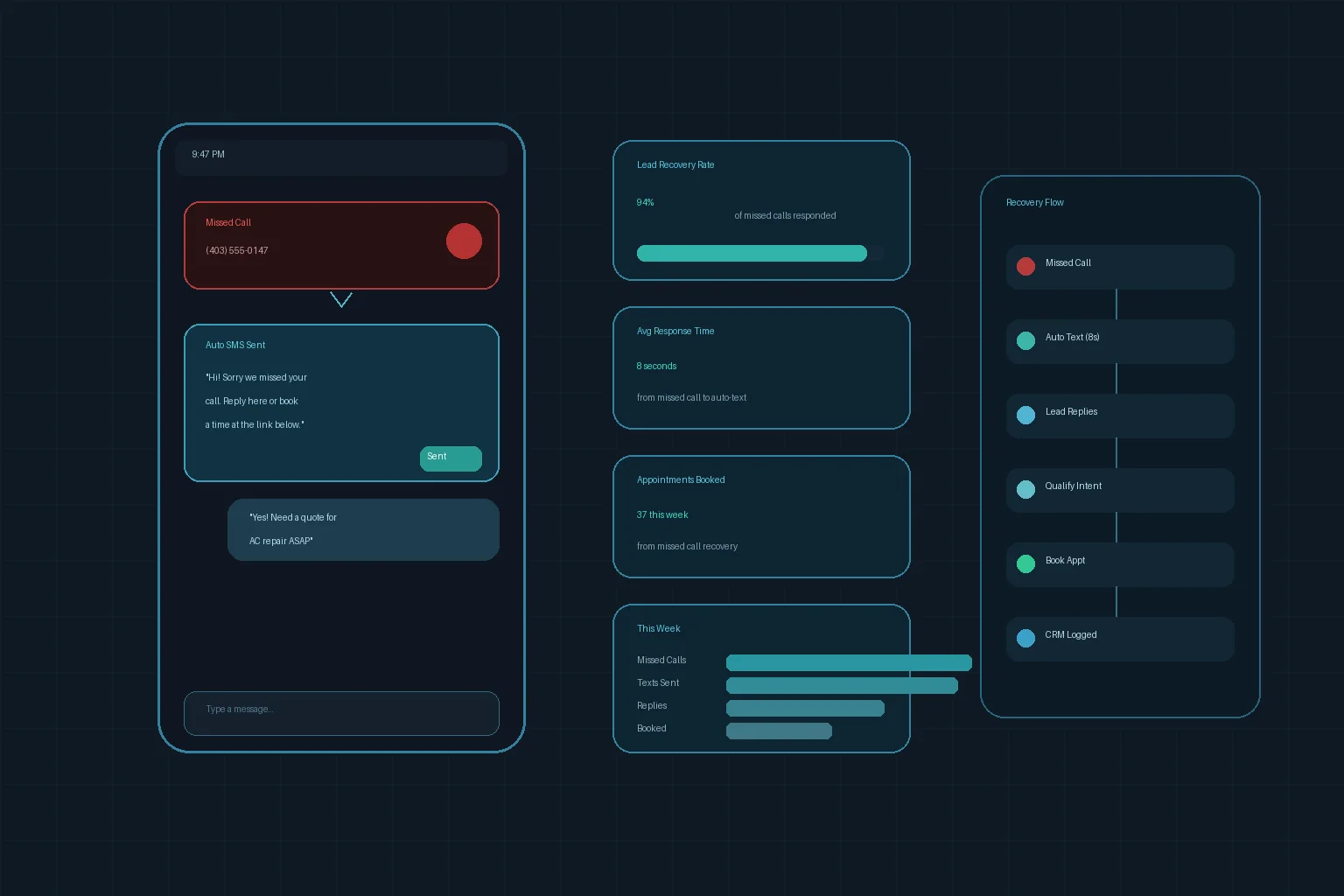
When a call is missed, the AI sends an immediate text: "Sorry we missed your call. What can we help you with today?" The lead responds. The AI qualifies them, answers questions, and schedules if appropriate. If the issue is complex, it escalates to a human with full context.
See the full breakdown in our AI SMS marketing guide for industry-specific strategies and compliance requirements.
What works: content at scale
Content marketing works, but most small businesses cannot produce enough of it. A single blog post takes four to six hours. Social media posts eat up another few hours per week. Video scripts, email newsletters, and ad copy add more.
AI content tools have gotten genuinely useful in 2026. They will not replace a skilled writer, but they can produce first drafts, generate topic ideas, and repurpose existing content across formats in minutes instead of hours.
The businesses using AI content effectively follow a pattern:
- AI generates the first draft based on an outline and keyword target
- A human edits for voice, accuracy, and specific examples
- AI repurposes the finished piece into social posts, email snippets, and ad variations
- AI schedules and publishes across channels
This cuts content production time by 60 to 70 percent while maintaining quality. The human still controls strategy and voice. The AI handles execution.
What works: 24/7 customer communication
Your marketing drives people to your website, your phone number, and your social profiles. Then what? If they reach out at 8 PM on a Saturday and get voicemail, that marketing spend is wasted.
AI customer support fills the gap. It answers routine questions, provides pricing, checks availability, and handles basic troubleshooting around the clock. Complex issues still go to humans, but 60 to 80 percent of inquiries never need to escalate.
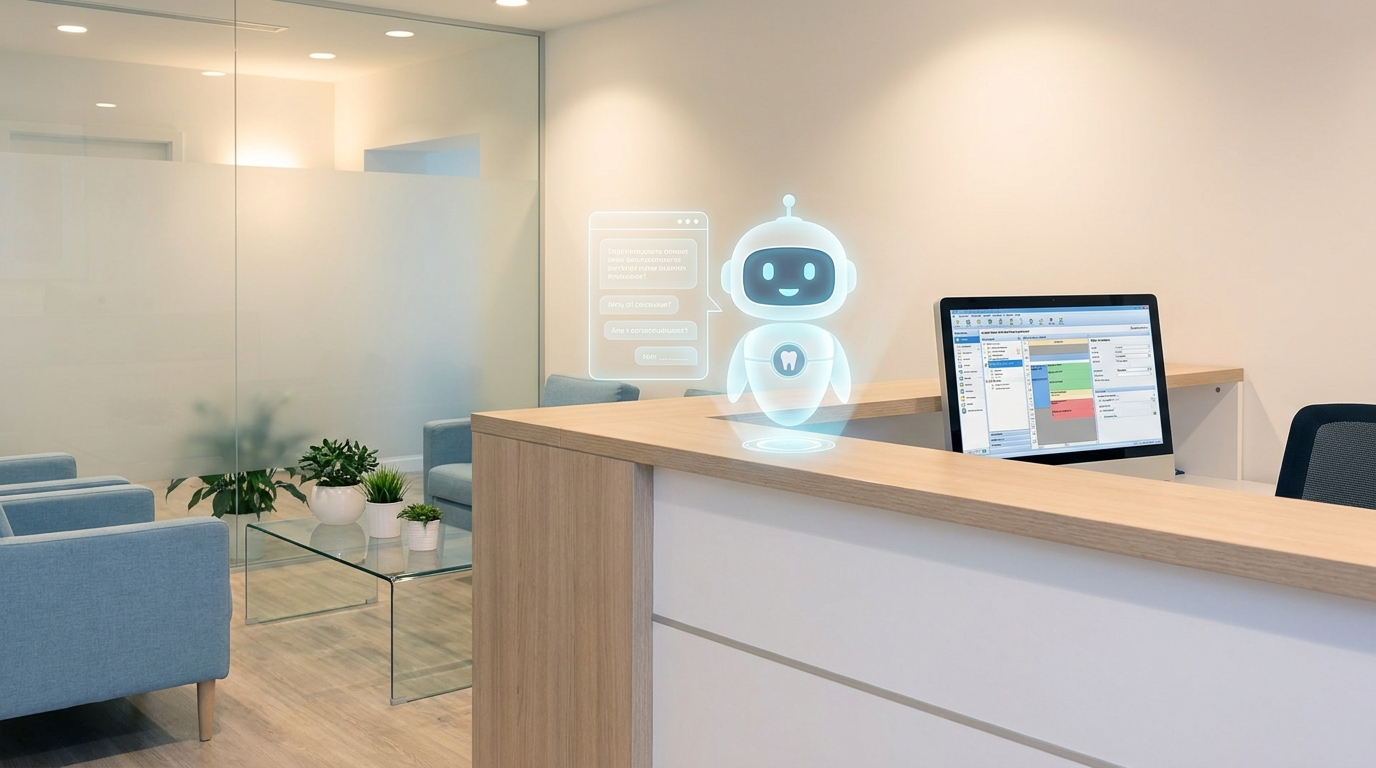
A dental practice using AI customer support found that 73 percent of after-hours inquiries were about appointment times, insurance questions, or prep instructions. The AI handled all of them. The human staff only saw the 27 percent that actually required clinical judgment.
What does not work: AI replacing human judgment
AI marketing has limits. It cannot:
- Build genuine relationships with high-value clients
- Handle emotionally sensitive situations
- Create truly original creative concepts
- Set overall marketing strategy
- Negotiate complex deals
Businesses that try to remove humans entirely end up with sterile, ineffective marketing. The goal is not replacement. It is amplification. The AI handles volume and speed. Humans handle nuance and relationships.
What does not work: set-it-and-forget-it
AI marketing tools need training, monitoring, and adjustment. An AI that answers your phones needs to know your services, your pricing, and your scheduling rules. An AI that writes content needs feedback on what tone works for your audience.
The businesses getting the best results check conversation logs weekly, update AI knowledge bases monthly, and refine workflows quarterly. They treat AI like a new employee who learns fast but still needs direction.
What does not work: cheap tools with no integration
Standalone AI tools that do not connect to your CRM, calendar, or phone system create more work than they save. If your AI chatbot books appointments but does not write them to your calendar, someone has to transfer them manually. If your AI qualifies leads but does not update your CRM, your sales team works from incomplete information.
Look for platforms that integrate natively with the tools you already use. The integration quality matters more than the AI sophistication.
How much does AI marketing actually cost?
Pricing varies by scope, but here are realistic ranges for small businesses in 2026:
| Tool Type | Monthly Cost | What You Get |
|---|---|---|
| AI chatbot | $50–$200 | Website chat, basic Q&A, lead capture |
| AI SMS platform | $100–$500 | Two-way text, missed-call recovery, appointment reminders |
| AI content generator | $50–$300 | Blog drafts, social posts, email copy |
| AI phone answering | $200–$800 | 24/7 call handling, appointment booking, call routing |
| Full AI workforce platform | $500–$2,000 | Multi-channel AI agents, CRM integration, analytics, human escalation |
Compare that to hiring a marketing assistant ($3,000–$5,000 per month) or a receptionist ($2,500–$4,000 per month). AI is not free, but it is a fraction of the cost for comparable coverage.
Check typical AI lead response pricing for your specific industry to build a cost model.
Real results from real businesses
Home services company
- 50 calls per week, 25 missed before AI
- AI SMS recovery captured 15 percent of missed calls
- Annual revenue recovery: $39,000 at $200 average job value
- Cost: $300 per month
Dental practice
- 80 new patient inquiries per month, 35 percent not answered live
- AI phone and chat handled after-hours and overflow
- New patient bookings increased 22 percent
- No-show rate dropped from 18 percent to 9 percent
Legal firm
- 60 intake calls per week, 40 percent outside business hours
- AI captured intake information 24/7, scheduled consultations automatically
- Client acquisition cost dropped 31 percent
- Staff focused on billable work instead of phone tag
Getting started: your 30-day AI marketing plan
Week 1: Fix response speed
- Add AI chat or SMS to your website and phone line
- Set up instant response for missed calls and form submissions
- Create conversation flows for your five most common inquiries
Week 2: Build follow-up
- Launch a multi-touch follow-up sequence for new leads
- Set up appointment reminders and confirmation messages
- Add reactivation campaigns for dormant customers
Week 3: Add content
- Use AI to generate first drafts for two blog posts or social campaigns
- Repurpose existing content into new formats
- Set up a publishing schedule
Week 4: Measure and adjust
- Review AI conversation logs for quality issues
- Track response time, conversion rate, and customer satisfaction
- Refine workflows based on what you learn
Frequently asked questions
Will AI marketing make my business sound robotic?
Only if you let it. Modern AI can match your brand voice, reference specific details about your business, and adapt tone to the conversation. The key is training and oversight. Review conversations weekly and provide feedback.
Do I need technical skills to set this up?
No. Most AI marketing platforms for small businesses are designed for non-technical users. Setup involves connecting your phone number, writing conversation scripts in plain English, and integrating with common tools like Google Calendar or your CRM. Most businesses are live within a few hours.
Is AI marketing compliant with privacy laws?
Yes, when configured correctly. The TCPA requires explicit opt-in for business SMS. GDPR and similar laws require clear consent for data collection. Reputable AI platforms include built-in compliance tools. You are responsible for obtaining consent, but the platform handles the technical requirements.
Can I use AI marketing with my existing phone number?
Yes. Most platforms let you forward your existing business line to the AI system. You can also get a new number for specific campaigns if you want to track results separately.
How does AI marketing compare to hiring a virtual assistant?
A human virtual assistant costs $1,500–$4,000 per month and works set hours. AI works 24/7 for a fraction of the cost. The human VA is better for complex, creative, or relationship-driven tasks. The AI is better for speed, consistency, and volume. Most successful businesses use both.
The bottom line
AI for small business marketing is not about doing more marketing. It is about capturing the revenue your current marketing already generates but loses to slow response, poor follow-up, and missed connections.
Your competitors are already using AI to answer leads at midnight, follow up for the fifth time without giving up, and text customers back while those customers are still interested. The businesses that close this gap first build a compounding advantage: more appointments, higher retention, and a reputation for responsiveness that generates referrals.
Start with one channel. Fix response speed. Add follow-up. Measure results. Within 30 days, you will know exactly how much revenue you have been leaving on the table.
Ready to see what AI marketing can do for your business? Book a demo and watch Dark Harbor's AI workforce capture the leads you are already paying for.