
Missed Call Text Back Software: What to Look For
Learn how missed call text back works, which features matter, and how to build a follow-up process that turns missed calls into clear next steps.
Missed Call Text Back Software: What to Look For
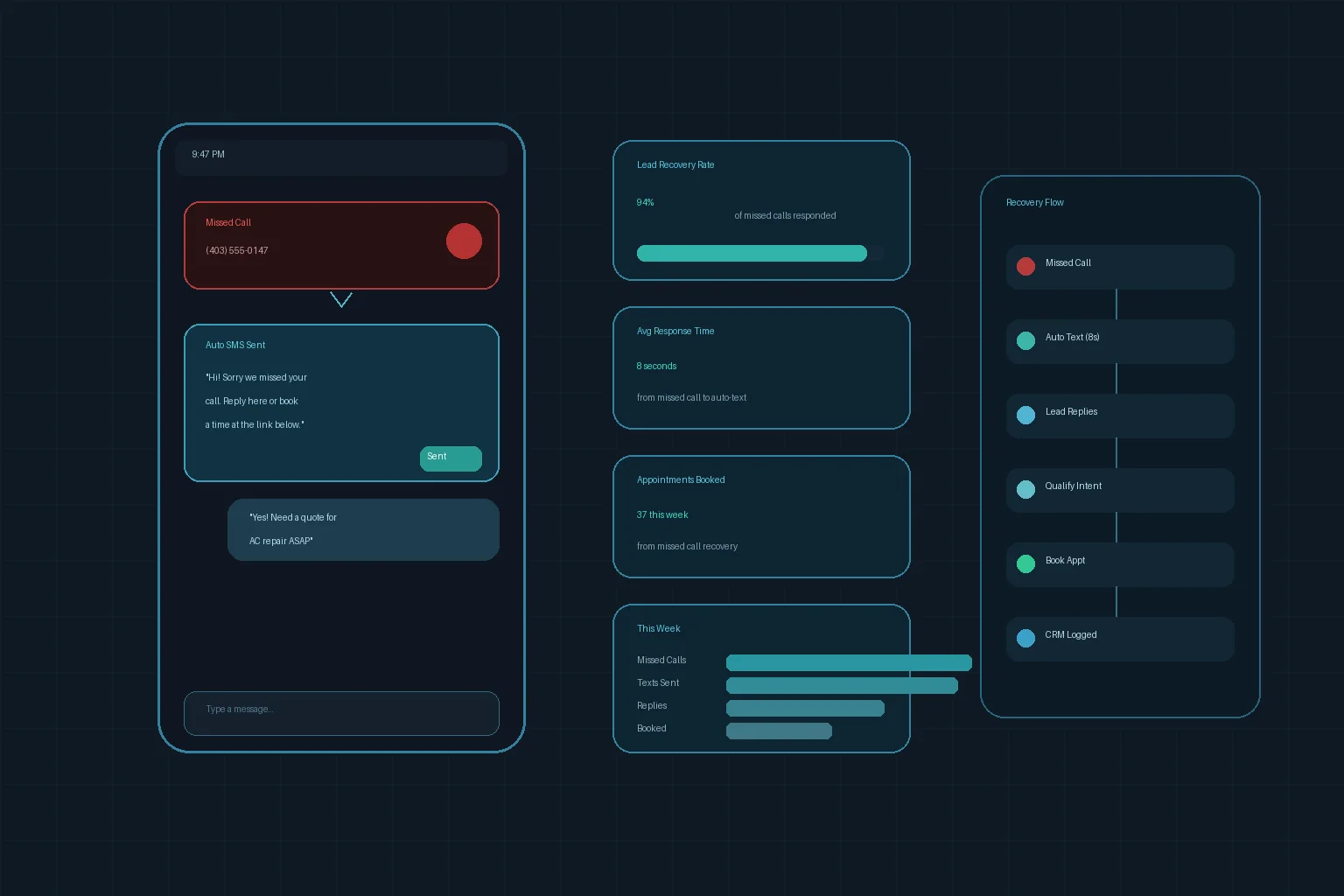
A customer calls while your team is busy. The call goes unanswered. A few seconds later, the customer gets a text that confirms they reached the right business and asks how you can help.
That is the basic job of missed call text back software. It turns silence into a conversation while the caller still has the problem in mind.
The text alone is not the full system. You still need clear ownership, useful questions, and a path from the first reply to a completed next step.
How missed call text back works
The software watches your business phone line. When a call is missed, it sends a message from a number connected to your business.
A basic message might say:
Hi, this is North Street Dental. Sorry we missed your call. What can we help you with?
The caller can reply by text. The conversation may go to a shared inbox, a customer record, an employee, or an automated workflow.
The best setup keeps the first message short. It names the business, admits that the call was missed, and asks one easy question. It does not send a long pitch to someone who only wanted your hours.
Why speed helps
A missed caller has already taken action. They may still have the phone in hand and may be ready to explain what they need.
A fast text reduces uncertainty. It tells the caller that the number works and gives them another way to continue. It also gives your team a written record of the request.
Speed is useful only when the reply leads somewhere. A message that arrives at once but sits in an unowned inbox still leaves the customer waiting.
Set a response standard for the next step. The five-minute speed-to-lead guide explains how to assign, track, and review that work.
Features that matter
Most tools can send an automatic text. The useful differences show up after the caller replies.
Fast, reliable delivery
The message should send soon after the missed call. Test calls from several carriers and devices. Check what happens during a phone outage or when the caller blocks text messages.
Business-hours rules
Your daytime message may promise a quick reply. Your after-hours message should set a different expectation.
For example:
Hi, this is Lakeside Plumbing. We are closed, but we received your call. Reply with your name, address, and the issue. For an active leak, call our emergency line at the number on our website.
Only promise emergency coverage when a person is truly available.
Two-way texting
The caller must be able to reply, and your team must see the full thread. Ask how conversations are assigned, transferred, tagged, and closed.
A shared inbox needs an owner and a backup. Without that rule, two people may answer at once or everyone may assume someone else handled it.
Clear contact records
The software should store the phone number, call time, message thread, source, owner, and next task. If it connects to your customer system, test duplicate contacts and existing customers.
Booking and routing
Some tools can offer appointment times or route replies by service, location, or urgency. Test the exact workflow you need. The word "integration" can mean a direct connection, a third-party bridge, or manual copying.
Consent and opt-out handling
Text rules vary by location and message type. Get advice that fits your business and jurisdiction. At minimum, make the business identity clear, respect opt-outs, and do not turn a service reply into an unwanted promotion.
Write messages for the caller's moment
The first message should sound like a useful response, not a campaign.
A strong general script is:
Hi, this is Business. Sorry we missed your call. What can we help you with?
For bookings:
Hi, this is Business. We missed your call. Are you looking to book, change an appointment, or ask a question?
For a service company:
Hi, this is Business. Sorry we could not answer. Reply with your name, location, and what you need help with.
Avoid asking for sensitive details in the first text. Do not request payment information, health details, or account passwords through a channel that has not been approved for that data.
Tell people what happens next. If a person will reply during office hours, say so. If the text can book directly, make that path clear.
Build the workflow after the reply
Map each likely response to a next action.
A booking request may go to an employee or a scheduling link. An urgent service issue may alert the on-call person. A current customer may need identity checks before the team shares private account information.
Use a fallback for replies the system cannot sort. Send them to a named queue rather than dropping them into a general inbox.
The workflow should also stop. Mark the thread complete when the customer gets an answer, books, speaks with a person, or asks not to receive more messages.
Measure completed work
Do not judge the system by the number of texts sent. That number only tells you how many calls were missed.
Track:
- Missed calls by day and hour.
- Texts delivered.
- Callers who reply.
- Time to a useful response.
- Bookings, transfers, and complete messages.
- Threads with no owner or next task.
- Opt-outs and complaints.
- Staff time spent cleaning up records.
Review the calls that did not become useful conversations. The caller may have used a landline, ignored the text, received the wrong message, or waited too long for a person.
Missed call text back should support phone coverage, not hide a broken answer process. If most valuable calls still need a live conversation, consider whether an AI receptionist for small business should answer selected calls instead.
Questions to ask a vendor
Before signing, ask:
- How soon does the text send?
- Which calls trigger it?
- Can rules change by hour, number, or location?
- Where do replies appear, and how are they assigned?
- What happens with landlines, spam, and repeat calls?
- How are opt-outs recorded?
- What data is stored, and for how long?
- What usage, number, setup, and support fees apply?
- Can we export threads and contact records?
- What happens if we leave the service?
Run a small pilot on one phone line. Test normal calls, after-hours calls, opt-outs, wrong numbers, and replies that do not match a rule. Fix the gaps before using it across the business.
If you want help designing the message, routing, and follow-up rules behind the text, Book a fit call.