AI Sales Enablement for Small Business

Sales enablement gives small businesses the systems to respond faster, qualify better, coach smarter, and close more deals. See how AI helps you build it without a big team.

Published May 24, 2026 Updated May 24, 2026 Author DarkHarbor.ai Read Time 8 min read
AI Sales Enablement for Small Business

Most small businesses do not have a sales enablement problem on paper. They have one in real life.

A lead comes in. No one answers right away. Notes get lost. Follow-up happens late, or not at all. The owner thinks the issue is sales skill, but the real gap is sales infrastructure.

That is where AI sales enablement helps. It gives a small business the systems to respond fast, qualify leads, coach reps, track calls, and book meetings without adding a full sales ops team.

What sales enablement means for a small business

Sales enablement is the set of tools, content, rules, and training that help a team sell the same way every time. In a large company, that can mean battle cards, playbooks, call reviews, CRM workflows, and a dedicated enablement manager.

For a small business, it is more practical than that. Sales enablement means having a clear system to:

  • Capture every lead.
  • Respond fast.
  • Ask the same qualifying questions.
  • Follow up until the lead buys or opts out.
  • Book the next step.
  • Log what happened, so you can improve it.

This is different from sales training alone. Training tells people what to do. Sales enablement makes sure it actually happens.

It is also different from pure sales operations. Ops keeps the systems running. Enablement makes those systems useful to the person trying to close the deal.

Why sales enablement matters more in 2026

Buyers expect quick answers now. If someone fills out a form at 8:12 PM, they do not expect a reply the next morning. They expect one now.

That is why speed to lead matters so much. When response time slips, qualification rates drop, trust drops, and the buyer moves on.

Small businesses also face a consistency problem. One rep asks the right questions. Another forgets. One person follows up five times. Another stops after one. One quote goes out the same day. Another sits in a draft folder for two days.

Sales enablement fixes that. It gives your business a repeatable way to sell, even if the team is small, busy, or still growing.

The five pillars of AI sales enablement

AI sales enablement is not one tool. It is a stack. Each part closes a leak that costs small businesses deals.

1. Automated lead response

The first job is to make sure every lead gets an answer.

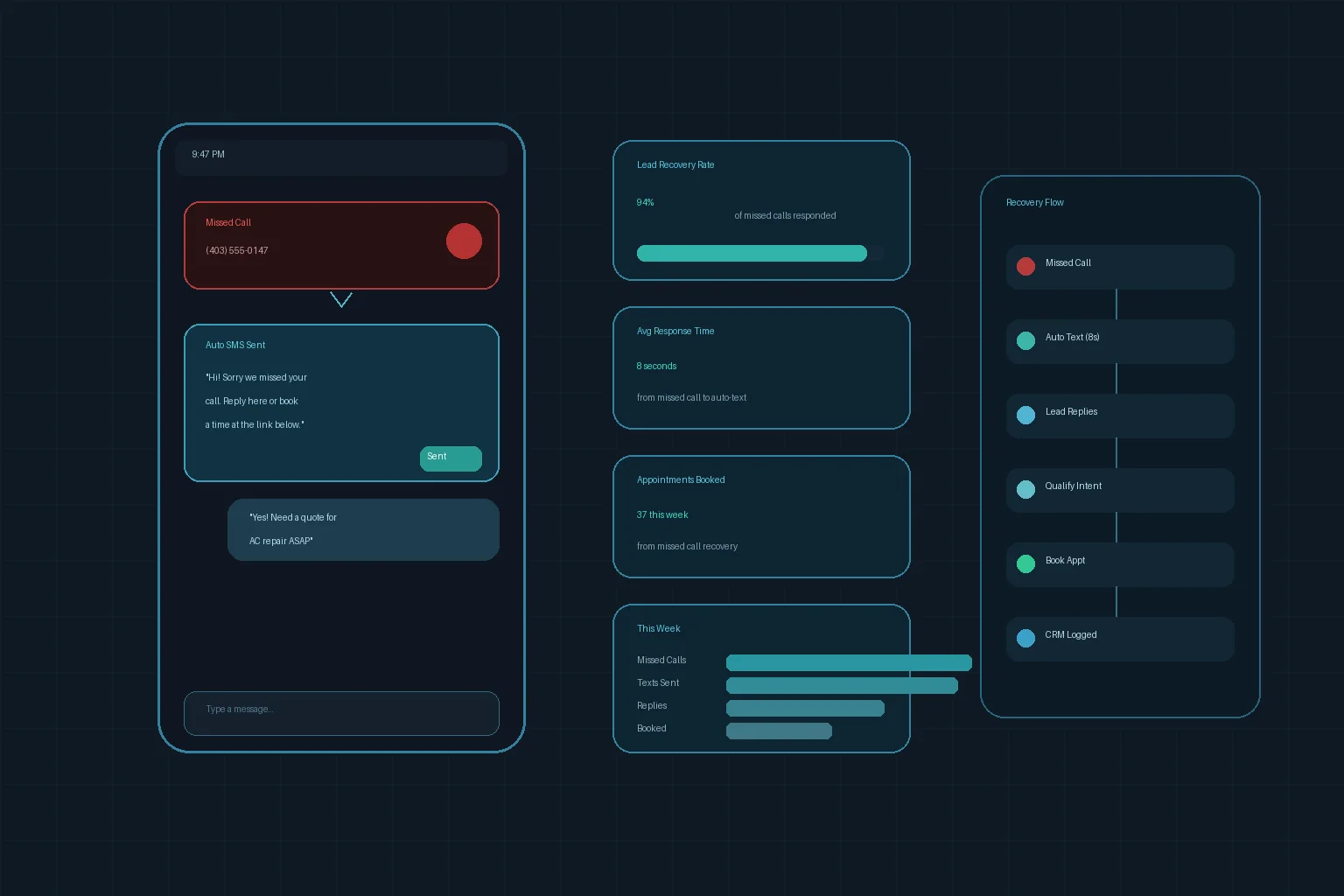
AI lead response handles inbound calls, web forms, texts, and missed calls the second they come in. It answers basic questions, captures contact details, and keeps the conversation moving while the lead still cares.

For teams that want a wider view, the AI lead response use case shows how this works across channels. If your business still relies on voicemail and manual callbacks, start here first.

2. Intelligent lead qualification

Not every lead deserves the same amount of time.

AI lead qualification helps your business ask the same questions every time. What service does the buyer want. What is their budget. How soon do they need help. Are they in your service area.

This keeps good leads moving and filters out poor-fit inquiries early. Your team spends less time on dead-end calls, and more time on deals that can close.

3. Automated follow-up and nurturing

Most leads do not buy on the first touch. They compare options, wait on a spouse, ask for pricing, or get distracted.

AI lead follow-up keeps the conversation alive after the first reply. It sends the next text, email, or reminder on time, every time.

For businesses that also do outbound work, AI outbound calling for small business extends the same discipline into reactivation and booked-meeting outreach. The point is simple. Good follow-up should not depend on who remembered.

4. AI-powered sales coaching and call intelligence

This is the part most small businesses skip, because manual coaching takes time they do not have.

AI cold calling and outbound sales shows how call scripts, objection handling, and talk tracks become more consistent when AI helps shape the process. AI call center systems add call logging, trend spotting, and better visibility into what reps are saying.

That matters because coaching is not just for big sales floors. Even a two-person team gets better when you can see which calls convert, which questions work, and where deals stall.

5. Centralized content and playbooks

Reps lose deals when pricing sheets are outdated, answers change by person, or no one knows which script to use.

AI document processing helps keep sales content searchable and usable. AI team operations playbooks show how to turn scattered habits into a real operating system.

This becomes your source of truth. One process. One message. Fewer made-up answers on live calls.

How to build your AI sales enablement stack without a big budget

You do not need to buy everything at once. In fact, that is the wrong way to do it.

Step 1: Start with response time. If leads wait hours for a reply, fix that first. Fast response has the biggest near-term impact.

Step 2: Add qualification rules. Once leads get answered, decide who counts as qualified and route them the same way every time.

Step 3: Layer in follow-up. This is where most revenue leaks happen. Build sequences for hot leads, warm leads, and reactivation.

Step 4: Add coaching and analytics. After the front end is working, use call data to improve scripts, handoffs, and close rates.

Step 5: Centralize your content. Put pricing notes, scripts, FAQs, and process docs in one place, so the whole team works from the same playbook.

This is why a unified platform matters. If lead response, qualification, follow-up, reporting, and playbooks all live in separate tools, the process breaks at the handoff.

Sales enablement metrics every small business should track

If you do not measure the process, you cannot improve it. Start with these five numbers:

  • First-response time: How long it takes to answer a new lead.
  • Lead-to-opportunity rate: How many raw inquiries turn into real sales conversations.
  • Win rate by lead source: Which channels actually produce customers.
  • Follow-up completion rate: How often your team finishes the sequence you planned.
  • Call-to-booking rate: How many conversations end with a scheduled next step.

Most small businesses track almost none of this. AI helps because it logs activity by default. You stop guessing, and start seeing where the funnel breaks.

Common sales enablement mistakes and how AI fixes them

Relying on manual follow-up

Manual follow-up sounds fine until the week gets busy. Then it slips.

AI fixes this by sending the next message on schedule, logging the contact, and escalating hot leads when a human needs to step in.

No standard qualification process

When every rep asks different questions, your pipeline fills with noise.

AI fixes this by using the same qualification flow every time. That makes routing cleaner and reporting more useful.

Inconsistent messaging

If one person promises same-day service and another says next week, trust drops fast.

AI fixes this by grounding replies in shared scripts, FAQs, and approved content. The message stays consistent, even when volume rises.

Ignoring call data

Many small businesses record nothing beyond "good lead" or "bad lead." That leaves no way to coach or improve.

AI fixes this by logging conversations, spotting patterns, and showing where deals fall apart. Better data leads to better coaching.

Common questions about AI sales enablement

What is the difference between sales enablement and a CRM?

A CRM stores information. Sales enablement helps your team use that information well. The CRM is the database. Enablement is the system that drives response, qualification, follow-up, coaching, and content.

Do I need a dedicated sales enablement manager?

Most small businesses do not. They need the process more than the title. AI can handle much of the repeatable work that a larger company would assign to an enablement manager.

How long does it take to see results?

If your main problem is slow response or missed follow-up, results can show up in the first week. Bigger gains from coaching, reporting, and process cleanup usually take a few weeks longer.

Can AI replace sales coaching?

No. AI can surface call patterns, suggest better scripts, and flag missed chances. Humans still handle judgment, live coaching, negotiation, and relationship building.

Build a sales process that actually runs

Sales enablement is not a nice extra for large teams. For a small business, it is the difference between a process that works and a process that depends on memory.

AI sales enablement gives you a practical way to respond fast, qualify better, follow up more often, coach more clearly, and keep the whole team on the same page. That is how small businesses close more deals without building a large sales department.

If you want the broader picture, start with our AI agent for small business guide. If you want to see the front line first, look at AI lead response for small business.


See how Dark Harbor helps small businesses build a working sales enablement system. Book a demo to see how the stack fits your pipeline.

Dark Harbor platform

Turn insight into operating leverage

Dark Harbor helps your business deploy virtual teams that actually move work forward. Use Dark Harbor platform to assign, review, and scale the workflows that matter most.